

How To Laser Cut Without Burnt Edges
Question: How can the edge of light amplification by stimulated emission of radiation cut wood not be burnt? Afterwards laser cutting, the edge of the wood cutting is carbonized. Is at that place any way to reduce this? For example, change the wood or conform the laser intensity?
The netizen replied: If you use carbon dioxide to cutting, you have never seen a cut that is not blackness anyway, blowing with an air compressor and blowing more volition take a good issue. If it is MDF, information technology will be a fiddling blackness, and the edges of the cutouts of other boards will have some light yellow, not so much blackness. Wood with a thickness of less than 5mm tin can be cut without carbonization, and thicker wood can hardly be guaranteed.
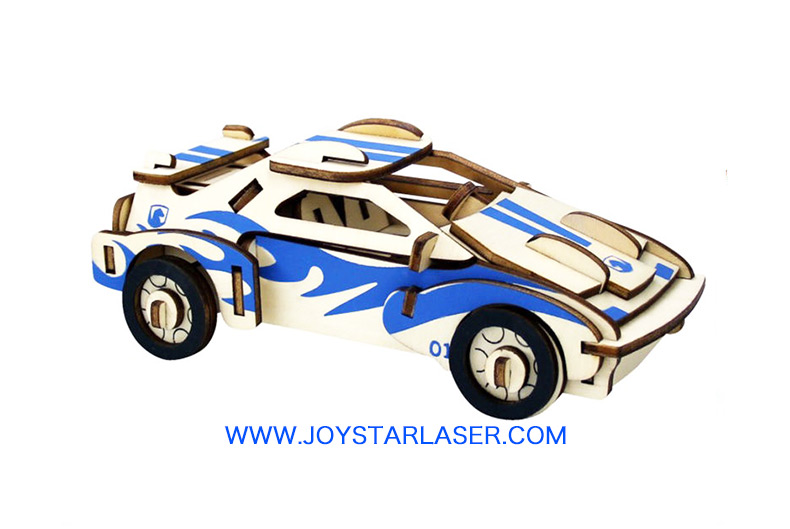
Using light amplification by stimulated emission of radiation to cut wood has the advantages of high precision, narrow cutting seam, fast speed, and polish cutting surface. However, considering the laser focus free energy melts the wood, there will be blackening during the cutting procedure, that is, the cutting border is carbonized. Today, Joystarlaser's laser application skilful talks to anybody about how to reduce or even avoid this situation.
The beginning thing to note is that if you lot are cutting a thicker plank, information technology is hard to avert blackening. Later on our test, we conclude that the cutting of a template with a thickness of 5mm or less can achieve less blackening, and for those above 5mm. It depends on the state of affairs, the following is a detailed clarification of what to practice to prevent the laser cutting forest from turning blackness.
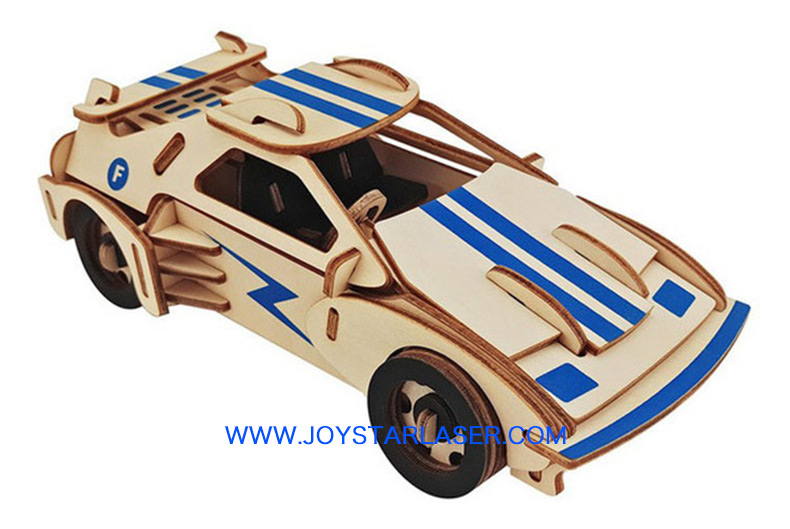
Maybe everyone knows that to avoid the carbonization result of laser cutting, utilize high speed and low power. This is correct, but some are misunderstood. They think that the faster the speed, the ameliorate, and the lower the power, the better. In order to reduce the blackening, they use fast and low ability to cut multiple times. This is very bad, and the carbonization event may be darker than normal.
Our low power and fast speed must ensure that the forest tin can exist cut through at one fourth dimension. The faster the speed is, the better, and the lower the power, the better. However, if the power is reduced and multiple cuttings are required, the carbonization phenomenon is actually more serious. Because the cut office volition exist burnt a 2d time, the more you cut, the more serious the carbonization.
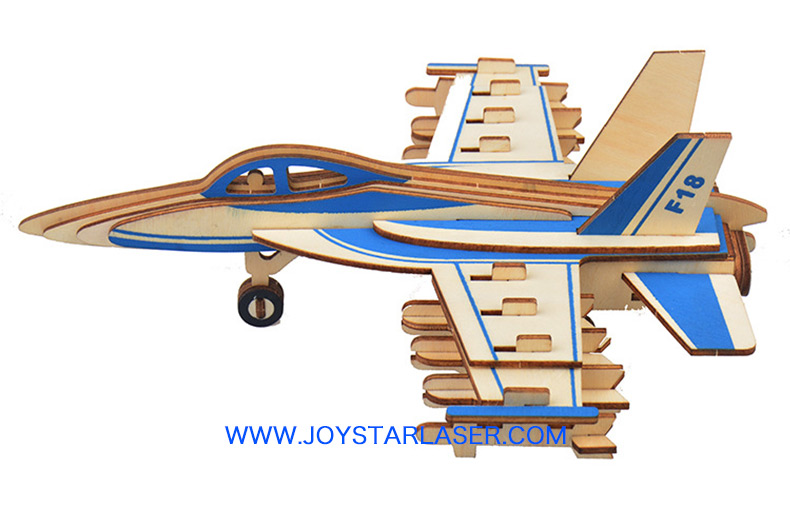
The function that was cut through the showtime fourth dimension was burned again during the 2d cut. The other role is not then night considering it was not cut through at the offset time. Therefore, the first thing to annotation is to ensure that information technology is processed in a single process and not candy twice to avoid secondary damage.
Fast speed and low power are contradictory. The faster the speed, the harder it is to cutting through, and the lower the power, the harder it is to cutting through. We have to prioritize between the two. According to my experience, fast speed is more than important than low power. Utilise larger power to attempt the fastest speed that tin cut through. Of course, this needs to be tested to get the all-time value. The following is the better information when I use the CO2 light amplification by stimulated emission of radiation cutting machine-150W light amplification by stimulated emission of radiation of Joy Star laser.
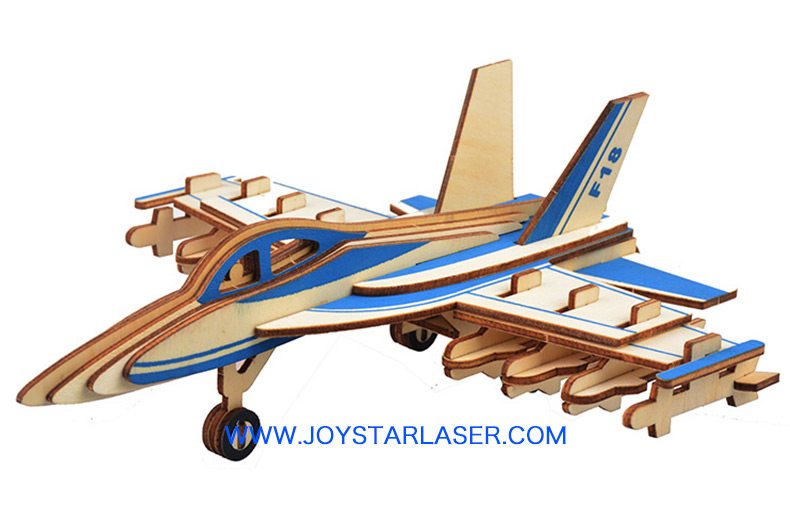
o cut 3mm plywood, I utilise 55% power and 45mm/s speed.
Information technology can be seen that under this parameter, in that location is basically no blackening.
For cutting 2mm plywood, I utilise twoscore% power and 45mm/southward speed.
I apply 65% power and 20mm/south speed to cutting 5mm plywood
Of course, in addition to the ability speed that affects the blackening, in that location is as well a very important gene, that is, bravado. Information technology is necessary to blow strongly when cutting wood. It is best to utilize a high-ability air compressor, because another factor of blackening and yellowing is: The gas produced by cutting is blackened, and blowing can help cutting to make cutting easier and prevent burn down.
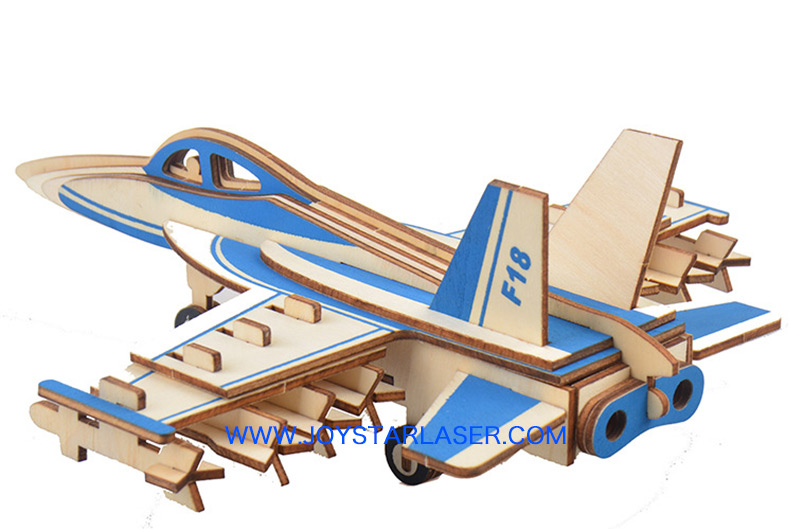
This concludes the experience of how to avoid blackening of forest by laser cutting. The examination data is not a limit number for reference only, and some redundancy is left. The experimental data can be faster and lower power, but it cannot guarantee a cut through. In practical applications, other factors should be considered: uneven platform, focal length problems acquired past uneven wooden boards, uneven materials of the plywood, etc., so be careful not to use the limit value to cut, information technology may be most a piddling chip Cut through.
If you lot notice that it is black no matter how y'all cut it, it may be a material problem, and the mucilage content of the plywood will too affect it. It is also very important to find more suitable materials.
Key points: Use fast speed, low power, and utilise an air compressor to assist in blowing nether the condition of ensuring a cut through at 1 time.
Source: https://www.joystarlaser.com/content-14-35-1.html
0 Response to "How To Laser Cut Without Burnt Edges"
Post a Comment